

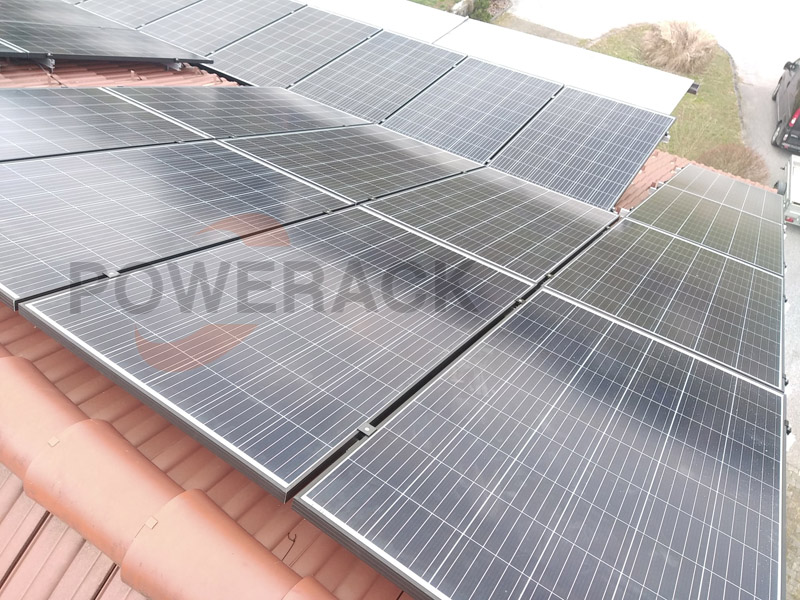
 Няма единен стандарт за дебелината на покривните ферми; те трябва да бъдат проектирани по поръчка, за да съответстват на вида на покрива, дължината на отвора, местните натоварвания от вятър и сняг, както и на работната среда. Изборът на подходящ модел въз основа на специфичните изисквания е най-безопасното, най-рентабилното и най-професионалното решение.
Повечето самостоятелно построени къщи в селски райони и градски жилища имат наклонени покриви или малки плоски покриви. С къси разстояния на покрива, ниски общи натоварвания и липса на излагане на силни ветрове или обилни снеговалежи, това са сценариите за монтаж с най-меки условия на натоварване.
Жилищни фотоволтаични системи имат компактно разположение и къси разстояния между решетките, така че конвенционалните натоварвания от вятър и сняг оказват ограничен натиск върху монтажните конструкции; следователно няма нужда от по-дебели профили. Изборът на фотоволтаични монтажни системи със стандартни за индустрията дебелини е достатъчен, за да се гарантира структурна безопасност в продължение на 25 години. Този подход гарантира адекватна твърдост и стабилност, като същевременно контролира общото тегло, като по този начин предотвратява дългосрочното стареене на покрива поради натиск и избягва повреди по керемидите.
Ключови съображения за жилищни приложения: лека конструкция, съвместимост с покрива, стандартна здравина и липса на прекомерно тегло.
Търговските и промишлените покриви, фабричните покриви със стоманена конструкция и големите разпределени електроцентрали се характеризират с дълги разстояния, разширени масиви и съседни разположение. Разстоянията на техните опорни греди и колони са значително по-големи от тези на типичните жилищни проекти, което води до по-голяма площ, изложена на вятър, по-високи снежни натоварвания и по-голямо дългосрочно износване от умора.
Това е особено вярно в заснежените северни райони и ветровитите вътрешни равнини, където през зимата се натрупва обилна снеговалеж, а през лятото има чести пориви на вятъра; продължителните натоварвания могат лесно да причинят леко провисване и деформация в стандартните структурни профили. Следователно, търговските и промишлените проекти изискват целенасочено подсилване на основните носещи компоненти – като главни греди и колони – за да се подобри общата устойчивост на огъване, срязване и налягане на вятъра, като се гарантира, че големите масиви ще останат без деформация, разхлабване или провисване в дългосрочен план.
Ключови съображения за търговски и промишлени приложения: Подсилване на критични компоненти, повишаване на структурната здравина и осигуряване на съвместимост с решетки с голям обхват.
3. Сурови условия: крайбрежни райони, силни ветрове и високи Надморска височина - прецизно удебеляване + подсилени компоненти
Крайбрежните райони, предразположени към тайфуни, откритата пустош и високопланинските райони представляват най-взискателните условия на натоварване за фотоволтаичните монтажни системи. Тези райони се характеризират със силни ветрове, чести пориви и високи коефициенти на налягане на вятъра. Освен това, крайбрежните райони са изправени пред корозия от солена мъгла, което представлява двойно предизвикателство за здравината и издръжливостта на монтажните системи.
За тези сценарии, простото увеличаване на дебелината на всички профили не е разумен подход, тъй като би довело до прекомерно собствено тегло. Професионалното дизайнерско решение включва подходящо удебеляване на основните греди и колони, които поемат първичните товари, като същевременно се запазва стандартната дебелина за вторичните профили. Това се комбинира с подсилени фитинги, подсилени съединители и по-плътно разстояние между тях. Този подход значително подобрява устойчивостта на вятър и вибрации, като същевременно стриктно контролира общото натоварване на покрива, за да се избегне прекомерно увеличаване на теглото.
Ключови съображения при избора на конструкции в тежки условия: прецизно удебеляване в точките на напрежение, армиране с аксесоари, структурна оптимизация и контролирано собствено тегло.
Нашият POWERACK системи за монтаж на соларни панели са проектирани със стандартни дебелини, стриктно съобразени с изискванията на различните сценарии на приложение. Напречните сечения на профилите са механично оптимизирани, за да се осигури устойчивост на вятър и носеща способност, без да се прибягва до ненужно удебеляване. Цялата продуктова линия използва основни материали, които отговарят на националните стандарти, комбинирани с цялостни антикорозионни процеси. Нашите продукти отговарят на всички спецификации, предлагат изключително съотношение цена-качество и се предлагат с цялостно гаранционно обслужване, което ги прави подходящи за широк спектър от разпределени и комунални соларни проекти.
Add : 606, No. 12, Huasheng Road, Huli District, Xiamen,China
WhatsApp : +86153 9592 2968
електронна поща : info@powerack.com



 български


