

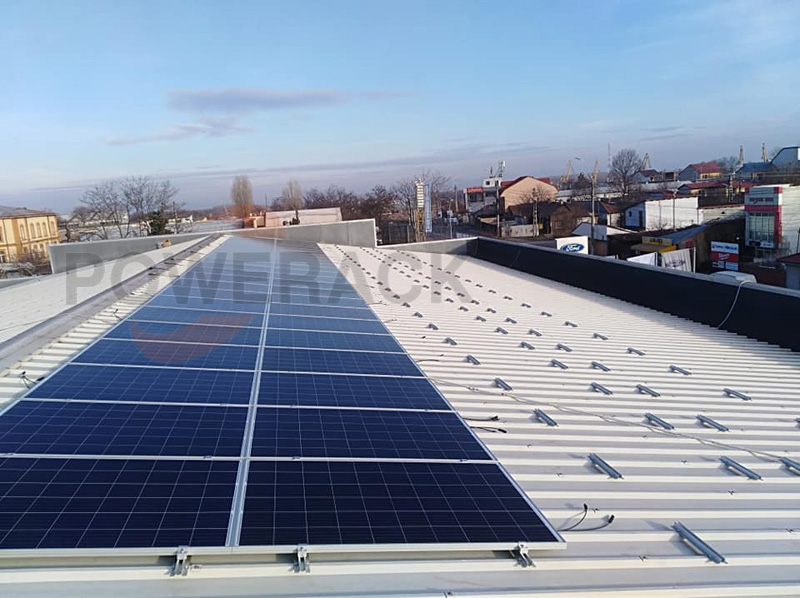
Течовете, причинени от пробиване на отвори във фотоволтаични покриви, не са внезапни проблеми, а по-скоро резултат от дългосрочно натрупани рискове. Всички проблеми с течовете на вода могат да бъдат проследени до специфични строителни дефекти, а основните причини могат да бъдат разделени на четири точки:
1. Хидроизолационният слой е директно пробит, създавайки постоянен път за проникване на вода
Пробиване на отвори за монтажни скоби директно прониква в съществуващите защитни слоеве на покрива, като водоустойчиви покрития и водоустойчиви мембрани, като напълно компрометира оригиналната хидроизолационна система на сградата. Освен ако не се извърши многослойна, затворена хидроизолационна армировка, дъждовната вода ще продължи да се просмуква през пролуките между болтовете и отворите, създавайки постоянен път за проникване на вода, който е трудно да се поправи или отстрани на по-късен етап.
2. Повреда на уплътненията на анкерните болтове, с образуване на пролуки поради термично разширение и свиване
Външните среди са подложени на екстремни температурни колебания между деня и нощта и през различните сезони, като има значителна разлика в коефициентите на термично разширение и свиване между... метални анкерни болтове и бетонни или хоросанови покриви. Продължителната и повтаряща се деформация и напрежение ще доведат до образуването на малки празнини между болтовете и отворите. Самото нанасяне на уплътнител върху повърхността не е достатъчно, за да се запечатат дълбоко разположени празнини; с течение на времето уплътнението се разваля, което позволява на дъждовната вода непрекъснато да прониква във вътрешната конструкция.
3. Прибързано и небрежно запечатване с лоша устойчивост на атмосферни влияния, склонно към стареене и напукване
За да намалят разходите, повечето нискобюджетни изпълнители на пазара просто запечатват дупки с обикновен уплътнител за стъкло или некачествени уплътнители. Тези материали предлагат изключително лоша устойчивост на UV лъчение, стареене и екстремни температури. След години на излагане на атмосферните условия – слънце, дъжд и вятър – те ще започнат да се кредят, напукват и лющят само в рамките на 1-2 години, губейки напълно хидроизолационната си способност и причинявайки течове на покрива.
4. Грешки при планирането на местата за сондиране, водещи до продължително преовлажняване на отворите
Поради невъзможност за точно планиране и позициониране по време на строителството, опорните точки за закрепване бяха пробити хаотично в ниските точки на системата за отводняване на покрива, в дренажните канали и във вдлъбнатините за събиране на вода. В резултат на това отворите бяха подложени на продължително навлажняване, като водното налягане непрекъснато проникваше в пролуките, което значително увеличаваше вероятността от проникване на вода. Това представлява необратима строителна грешка и е основна причина за чести течове в стареещите фотоволтаични покриви.
Пробиване на отвори за скоби за монтаж на фотоволтаични системи не е основната причина за течове на вода; по-скоро некачественият монтаж, нискокачествените спомагателни материали и пропускането на процедури за хидроизолация са основните проблеми, причиняващи течове на покрива. Самите монтажни скоби, след като бъдат закрепени на място, са структурно здрави и предлагат отлична устойчивост на вятър. При условие че са комбинирани със стандартизирани практики за монтаж на хидроизолация, висококачествени хидроизолационни компоненти и специализирани уплътнителни материали, те могат напълно да отговорят на 25-годишния експлоатационен живот на фотоволтаична електроцентрала, елиминирайки всякакъв риск от проникване на вода през целия ѝ експлоатационен живот.
Add : 606, No. 12, Huasheng Road, Huli District, Xiamen,China
WhatsApp : +86153 9592 2968
електронна поща : info@powerack.com



 български


